
Rhythm Shooter: Phonk Rush
CodiPlayerMusic
4.16.00 Reviews
- Version
- 1.0.7
- Installs
- 1.00M
- Age Rating
- Everyone
Screenshots
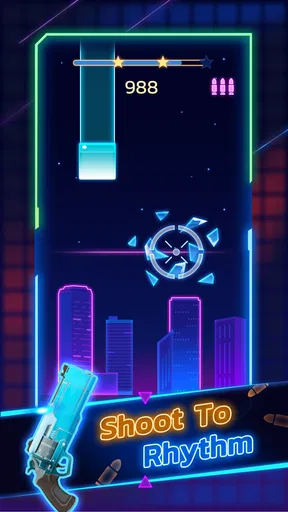
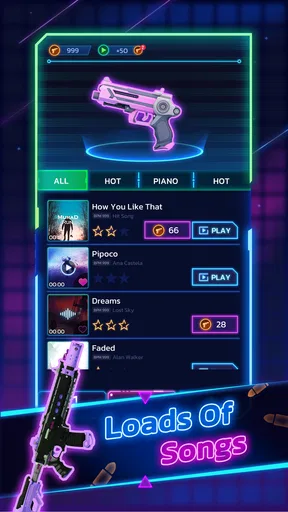
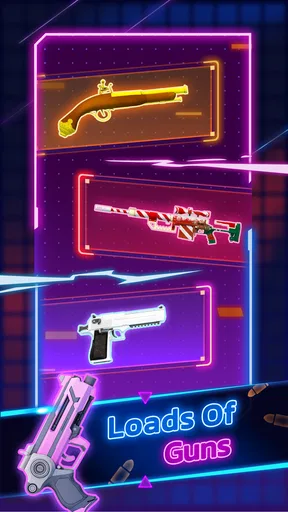
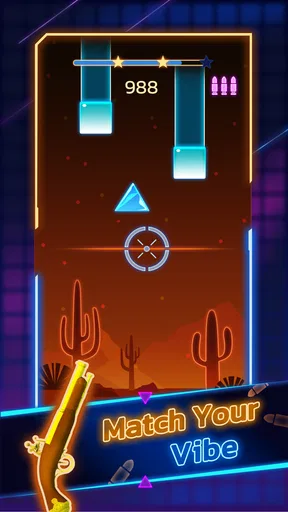
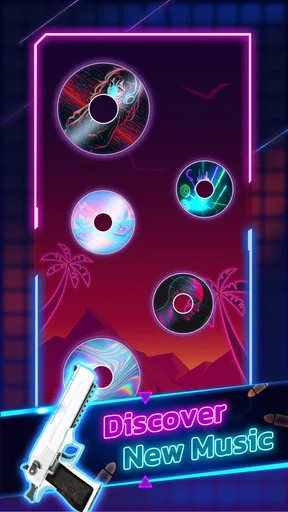
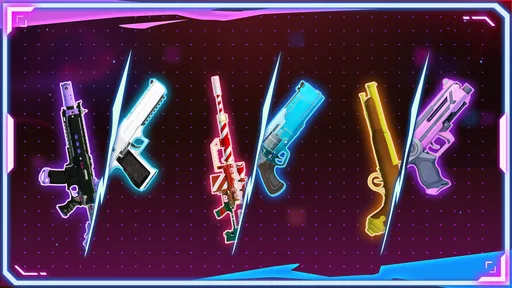
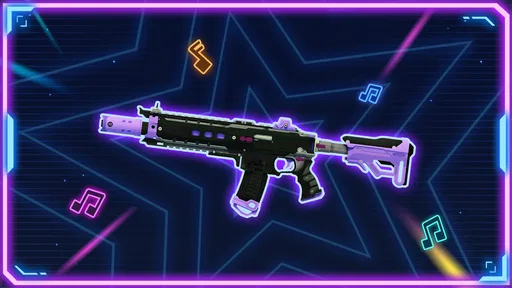
Our Review of Rhythm Shooter: Phonk Rush
 Analysis by Appyee
I tried Rhythm Shooter: Phonk Rush as a quick music game built around one clear idea: your shots should land with the beat. That makes it easy to understand within moments, but the appeal is not simply pointing at targets. The timing, visual movement, and pressure of making decisions while the track continues are what give each session its character.
This is a free game in the music category from CodiPlayer, aimed at an Everyone audience. It runs on Android devices using version 6.0 or later, and the current release is 1.0.5. The game has reached over a million installs and holds a 4.3 average from around a thousand ratings, which suggests that its straightforward rhythm-shooter formula has found a sizeable audience.
How the rhythm-shooter idea works in practice
The central attraction is the connection between sound and action. Instead of treating music as background decoration, the game asks me to use the beat as a cue for shooting. That changes the way I play: I am not only watching for targets, but also listening for the moment when an action feels right.
That design gives the game a more active feel than a conventional music player with animated visuals. At the same time, it is less demanding than a full rhythm game that expects constant precision from several inputs at once. The shooting theme supplies the sense of momentum, while the music supplies the timing.
The phonk-inspired presentation is important to the identity of the game. It gives the experience a darker, more energetic mood than a bright casual music title, and it suits short sessions where I want something immediate rather than a long story or complicated progression system. The store summary focuses on shooting to the beat, and that is an accurate description of the basic loop without giving away more than the game needs to explain.
What I like about this kind of structure is how quickly it communicates its purpose. I do not need to learn a large set of rules before enjoying it. I can begin with the rhythm, watch how targets appear, and gradually adjust my timing. That makes it approachable for someone who enjoys music games but does not want to study a complex control scheme first.
Why listening matters more than frantic tapping
My most useful adjustment was to stop treating every target as an isolated object. When I focused only on what was directly in front of me, I tended to react late. When I listened to the track and anticipated the next beat, the action felt more controlled. This is a small but meaningful difference: the game rewards attention to its audio identity, not just fast fingers.
That also creates a practical way to play in short bursts. I can use a quick session as a concentration break, but it still feels more involving than an idle distraction. The rhythm gives my attention a pattern to follow, while the target-shooting element keeps the session from becoming passive.
Players who usually enjoy rhythm games may recognize the appeal immediately, although the shooting focus changes the feel. Players coming from arcade shooters may need a little time to accept that speed alone is not the main skill. The best results come from balancing visual awareness with musical timing.
A useful way to approach the first sessions
I recommend beginning with a relaxed mindset rather than trying to chase perfect performance immediately. The first few attempts are useful for learning how the game presents its targets and how closely the action follows the music. Once that relationship becomes familiar, I can concentrate on improving consistency instead of guessing what the game expects.
A second helpful habit is to keep the volume at a level where the rhythm remains clear. If the sound is too quiet, the visual action can become the only source of information, which removes much of the game’s distinctive character. If I am playing somewhere that requires silence, I can still focus on the screen, but the experience loses some of the feedback that makes the concept work.
For longer sessions, I would also alternate between focused attempts and short pauses. Music games can make small timing errors feel more frustrating when I repeat the same section immediately. Taking a moment to reset my attention makes the next attempt feel more deliberate and helps prevent the game from turning into mindless tapping.
What free access means for its value
The clearest value point is simple: the game is free to access. That makes it easy to try without making a purchase decision first. For a player who is curious about music-based shooting, this is a genuine advantage because the concept is specific enough that personal taste matters. Some people will enjoy the beat-driven action right away; others will prefer a traditional rhythm game or a standard shooter.
Because there is no listed purchase price to weigh against the experience, I judge its value by how well it serves short, repeatable sessions. It succeeds when I want an immediate activity with music at the center. It is less convincing if I am looking for deep narrative content, a broad competitive structure, or the flexibility of a general music application.
The free format also makes it suitable for casual discovery. I can install it for a particular mood, play for a few minutes, and decide whether the style fits my habits. That is more useful than committing to a larger paid game before knowing whether the rhythm and shooting combination feels natural to me.
At the same time, free access should not be confused with unlimited value for every player. A game can cost nothing and still fail to justify time if its loop becomes repetitive or if its presentation does not match the player’s taste. In this case, the strongest value comes from enjoying the specific phonk and arcade atmosphere rather than expecting it to replace every other kind of music game.
Where the experience can feel limited
The narrow focus is both the game’s strength and its main limitation. Shooting to music is a clear hook, but it does not offer the same variety as a broader arcade collection. If I want puzzles, exploration, a story, or several unrelated game modes, this is not the right destination.
There is also a possible adjustment period for players who rely heavily on visual reactions. Rhythm-based action can feel less forgiving when my eyes and ears are working at different speeds. A target may be visible before the moment when I should act, so rushing can be less effective than waiting for the musical cue. That is not a flaw in the concept, but it can be frustrating if I expect a conventional aim-and-fire game.
The music style will naturally divide the audience. Players who like phonk or energetic electronic moods may find the presentation motivating. People who prefer calm instrumental tracks, pop-focused playlists, or a wide range of genres may find the atmosphere too specific. The game’s identity is clear, but that clarity means it will not suit every listening preference.
Another trade-off is the difference between a quick novelty and a lasting routine. I can easily imagine playing it during a short break, yet long-term enjoyment will depend on whether the available rhythm challenges continue to feel fresh to me. Someone who needs a large progression system or frequent changes in objective should approach it more cautiously than someone who enjoys repeating a familiar arcade loop to improve timing.
How it compares with usual alternatives
Compared with a standard rhythm game, this title places more emphasis on the action metaphor. Instead of simply following lanes, notes, or button prompts, I am encouraged to think about targets and shots. That can make the experience feel more kinetic, especially when I want music gameplay with a stronger arcade edge.
Compared with a conventional shooter, the musical timing changes the priority. Accuracy is not only about where I aim; it is also about when I act. A player who enjoys fast visual reactions but dislikes rhythm mechanics may prefer an ordinary shooter, while someone who wants the soundtrack to influence the action will probably find this approach more distinctive.
It also differs from using a music app because the soundtrack is part of a task rather than something I select and passively hear. I am interacting with the beat, not simply using the phone as a listening device. That makes it a poor replacement for a dedicated music player, but a better choice when I want a game that gives my listening attention a purpose.
For someone choosing between this and a large paid rhythm title, the decision comes down to commitment. This free game is easier to sample and more focused in its premise. A bigger alternative may be preferable for players who want extensive song libraries, elaborate progression, or a more established competitive framework, but those expectations should not be imposed on a compact phonk shooter.
Everyday situations where it makes sense
I found the most natural use case during a short waiting period. Instead of opening a social feed and losing track of time, I could play a brief round that demanded enough attention to feel engaging. The music gave the session a clear mood, and the target timing made it more active than simply watching a video.
It can also work after a study or work block when I want a small change of focus. I would not describe it as a relaxation game in the traditional sense, because the action can be energetic, but the repeated beat can provide a structured mental reset. The important point is to treat it as a short activity rather than assuming it will supply a full evening of variety.
For a family device, the Everyone content rating makes the game easier to consider for a broad audience. Even so, the shooting theme may not appeal to every household, regardless of its age classification. I would choose it for someone who enjoys stylized arcade action and music, not merely because it is accessible to a wide age group.
Who will get the most from it
I would recommend it to players who like music to influence gameplay, enjoy phonk-flavored energy, and want a free title that can be understood quickly. It is especially suitable for people who appreciate improving through repetition. The satisfaction comes from recognizing the beat, reacting with better timing, and making the action feel smoother from one attempt to the next.
It is also a sensible choice for someone with an older Android phone, since the minimum operating-system requirement is Android 6.0. That does not guarantee identical performance on every device, but it does make the game available to a wider range of Android users than a title restricted to recent systems.
I would be more hesitant to recommend it to players who dislike music-driven mechanics, want a quiet experience, or expect a deep shooter with extensive tactical choices. It is not the right pick for someone searching for a story campaign, realistic weapon handling, or a substitute for a full music library.
It may also be a poor match for users who quickly tire of repeating a focused mechanic. The game’s appeal depends on the pleasure of doing the same basic kind of thing with increasing control. If that sounds repetitive rather than satisfying, a broader arcade game will probably deliver better value even if it costs more.
My verdict on installing it
My overall view is positive, but deliberately specific. This is not a universal music game and it does not need to be. Its value comes from combining a phonk-oriented mood with beat-aware shooting in a package that is free to try. The concept is easy to grasp, yet it has enough timing nuance to reward players who listen instead of relying only on quick visual reactions.
CodiPlayer has chosen a focused direction, and that focus makes the game memorable. The trade-off is that the same narrow identity may limit its staying power for anyone who wants many genres, extensive modes, or a more traditional shooter experience. I would install it when I want a short, energetic rhythm challenge, not when I need a complete gaming platform.
The current version, 1.0.5, gives Android users on version 6.0 or newer a straightforward opportunity to test that idea without paying an entry fee. With an Everyone rating and a growing audience of more than a million installs, it is easy to see why the game can attract casual players. Still, the best reason to try it is not its reach; it is whether the beat-driven shooting loop matches your taste.
My recommendation: try it if you want free arcade action shaped by music, and skip it if you are looking for depth outside that exact formula. For the right player, it is a convenient pick-up-and-play game with a clear personality. For everyone else, a conventional rhythm title, a broader shooter, or a dedicated music app will be a better fit.
Privacy and Permissions
See what permissions an app requests and how it handles your data.
- Wi-Fi connection information
- view Wi-Fi connections
- Other
- view network connections, full network access, control vibration, prevent device from sleeping, Google Play license check
Verdict
Strengths of Rhythm Shooter: Phonk Rush
- Fast, responsive controls make short sessions feel satisfying.
- Phonk-inspired tracks give runs a strong, energetic atmosphere.
- Simple gameplay is easy to understand without a long tutorial.
- Bright visual effects make successful shots feel rewarding.
- Works well for quick play sessions when you have limited time.
Limitations of Rhythm Shooter: Phonk Rush
- Repeated patterns can make later runs feel somewhat predictable.
- Heavy visual effects may be distracting during intense sections.
- Progress may feel slow if new content requires extended play.
- The music style may not appeal to players who dislike phonk.
- Performance can vary on older phones during effect-heavy moments.
Other Releases by CodiPlayer
View All
Piano Music Heart: Pop Tiles
Music4.8

Beat Dash: Neon Rhythm
Music0.0
Similar Picks in This Category
View All
Tiles Hop Music & Ball Game
AMANOTES PTE. LTD.4.3

Magic Tiles 3™ - Piano Game
AMANOTES PTE. LTD.4.6

Real Piano
Bilkon3.7

Piano Game: Classic Music Song
Dream Tiles Piano Game Studio4.0

Smash Colors: Music Ball Rush
BADSNOWBALL HONGKONG LIMITED4.2

Piano Music Go-EDM Piano Games
Joy Journey Music Games4.5
Frequently Asked Questions
What is Rhythm Shooter: Phonk Rush?
Rhythm Shooter: Phonk Rush is a music-based arcade game that combines fast shooting mechanics with phonk-inspired tracks. As you move through each level, you must react to the beat, avoid obstacles, and shoot targets or enemies in time with the music. The experience is designed for short, energetic sessions and rewards quick reflexes, accurate timing, and consistent rhythm control.
How do you play Rhythm Shooter: Phonk Rush?
Gameplay is generally based on controlling a character or weapon while following the rhythm of the selected track. Players tap, swipe, or otherwise interact with the screen to hit targets and overcome incoming challenges. The better your timing, the higher your score is likely to be. Beginners may need a few attempts to become comfortable with the speed and changing patterns.
Is Rhythm Shooter: Phonk Rush free to download and play?
The game can typically be downloaded without an upfront purchase, although availability and pricing may vary between Android and iOS. Like many mobile arcade games, it may include advertisements, optional in-app purchases, or unlockable content. Before installing, check the store listing for current information about ads, purchases, permissions, and whether an internet connection is required.
Does Rhythm Shooter: Phonk Rush require an internet connection?
Some features may work offline, especially basic gameplay, but the exact experience depends on the version installed and how the game handles advertisements, updates, leaderboards, and additional content. An internet connection may be needed for downloading certain resources or synchronizing progress. If you plan to play while traveling, test the game offline first rather than assuming every mode will be available.
Is Rhythm Shooter: Phonk Rush suitable for all players?
Rhythm Shooter: Phonk Rush is best suited to players who enjoy energetic music, quick reactions, and arcade-style action. Its rapid visual effects, shooting themes, and intense soundtrack may not appeal to everyone, particularly younger children or people sensitive to flashing imagery. Parents should review the age rating, advertising, in-app purchase options, and device settings before allowing children to play.
Play our best games!


